Afrim Spahiu
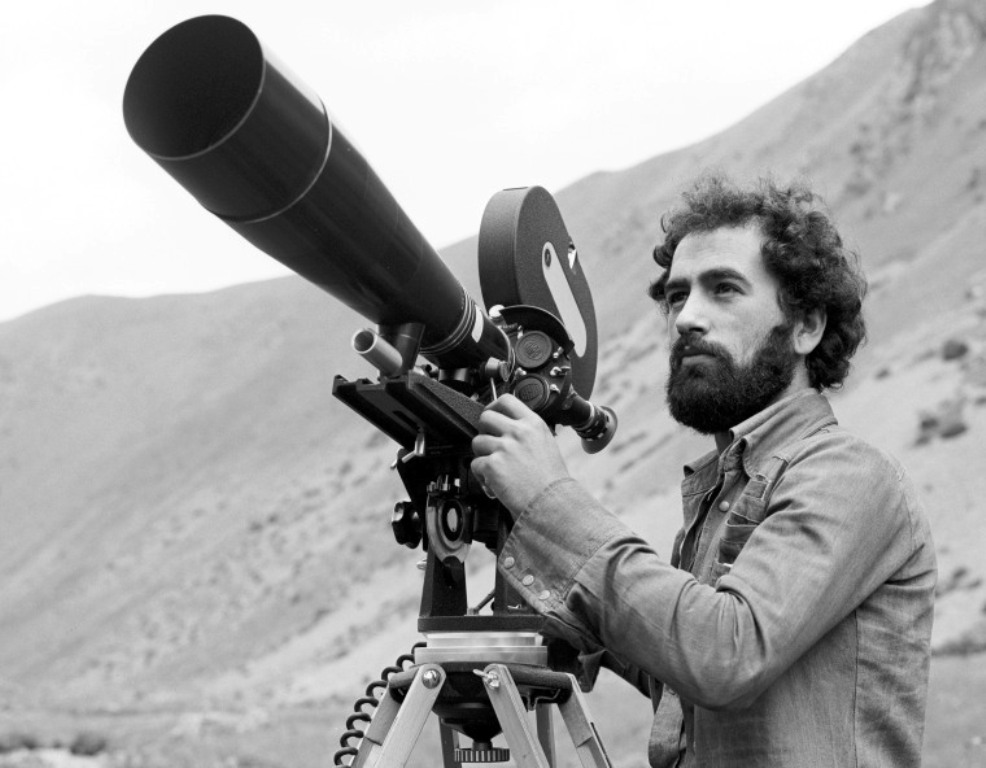
Afrim Spahiu is a photographer, cinematographer, educator and curator based in Prishtina. Born in Dibër on 3 May 1951, he has worked across photography and film for more than five decades, developing a practice that moves between the still and the moving image, between artistic work and documentation, and between making images and teaching others how to see them.
He studied at the Academy of Theatre, Film and Television at the University of Zagreb, in the class of Professor Nikola Tanhofer, where he completed his studies in cinematography. In 1975, he began working as a cameraman at Radio Television of Prishtina. The following year, he joined Kosovafilm as a director of photography, entering a period of intense development in Kosovar cinema and becoming part of a generation of filmmakers who were establishing the visual language of the region.
Over the following decades, Spahiu worked as director of photography on more than 25 feature films, documentaries and other productions. His filmography includes 117, Gjurmët e bardha, Lepuri me pesë këmbë, Përroi vërshues, Proka, Kolonel Bunker, Lule të Kuqe Lule të Zeza, Trishtimi i Zonjës Shnajder, Anatema, Banka and Gomarët e Kufirit, among others. His work has taken him across Kosovo, Albania and the wider region, collaborating with directors including Besim Sahatçiu, Ekrem Kryeziu, Isa Qosja, Kujtim Çashku and others. 117 received the Grand Prix at the 1977 Yugoslav Festival of Documentary and Short Films, while Proka received the Grand Prix at the Festival of Young Cinema in Cannes. His cinematography for Kolonel Bunker, a Kosovo-Albania-France-Poland production directed by Kujtim Çashku, became part of one of the best-known films of Albanian cinema of the 1990s.
Yet film is only one part of Spahiu’s practice. Photography has accompanied him from the beginning and remains central to his way of working. His photographs range from carefully composed artistic images to portraits, documentary work, architectural and cultural documentation, commissioned publications and images made for exhibitions and books. He has held individual exhibitions in Prishtina, Dibër, Novi Sad, Ljubljana, Piran, Sarajevo, Peja and Skopje, while participating in collective exhibitions and international photography projects throughout the region.
His photographs have also become part of the visual record through which Kosovo and its cultural life have been represented. Over the years, he has contributed photography to monographs and publications dedicated to Kosovo’s art, architecture, institutions and cultural heritage, including Kosova, Biblioteka Kombëtare, Hani i Elezit, Arti Bashkëkohor i Kosovës, Agim Çavdarbasha and Kosova, published by the Academy of Sciences and Arts of Kosovo.
Spahiu’s relationship with photography has never been limited to making images. He has been equally concerned with creating spaces in which photography can be studied, discussed and seen. He founded the Institute of Photography and Film “Gjon Mili” in Prishtina, where he taught and served as director from 2002 to 2005. He has taught analogue and digital photography, cinematography and photojournalism at the Faculty of Arts in Prishtina, AAB University, the University of Tetova, Evolution College and other institutions. He has also led workshops, participated in public discussions, served on national and international film and visual arts juries, and worked as a curator of exhibitions by photographers from Kosovo and abroad.
This combination of practice, teaching and cultural work has shaped his position within the development of photography and film in Kosovo. He has been involved not only in producing images, but also in the conversations, institutions and generations that have grown around them.
In 1998–1999, during the war in Kosovo, Spahiu was commissioned by Caritas to photograph in war-affected areas. The photographs documented burned and destroyed homes and were used to communicate the scale of the destruction to European donors. This experience brought photography into a different kind of responsibility: the camera became a means of witnessing, recording and communicating events that could otherwise remain distant or unseen.
At the same time, his artistic photography has continued to return to questions of light, form, atmosphere and perception. Whether working with a film camera on a set, photographing a landscape, a building or a person, or constructing an image as an independent work, Spahiu approaches photography through the act of looking. His work often begins with what is directly in front of the camera, but moves toward something less literal: an arrangement of light, shadow, texture and space.
His practice has evolved alongside the technologies of image-making — from analogue photography and film to digital processes and multimedia work — without treating one medium as a replacement for another. The recent multimedia exhibition Dritëshkrimi Estetik i Artistit Afrim Spahiu, presented in Suharekë in 2026, continues this ongoing engagement with the image and with photography as an artistic language.
Over the course of his career, Spahiu has received numerous awards for his work in photography and cinematography, including recognition at film and photography festivals in the former Yugoslavia, Kosovo and Albania. In 2021, he was awarded the National Lifetime Achievement Award in Cinematography by the Ministry of Culture of Kosovo.
More than a record of films, photographs, exhibitions and teaching, Afrim Spahiu’s work traces a particular history of looking. His career has unfolded alongside major changes in Kosovo and the region, and his camera has been present in many of them — on film sets, in classrooms, galleries, books and, at times, in places where the act of photographing meant bearing witness.
Photography and cinema remain, for Spahiu, closely connected: two ways of working with light, time and memory, and two ways of giving form to what has been seen.
Overview
50+ Years Experience
25+ Feature Films & Documentaries
20+ Solo Exhibitions
40+ Years Academic Teaching
3 May 1951 — Dibër
Prishtinë, Kosovë